
Just two months after liberation, they were finally able to return to their village. "We never even dared to dream of this moment," Othman says. "We could not believe it happened."
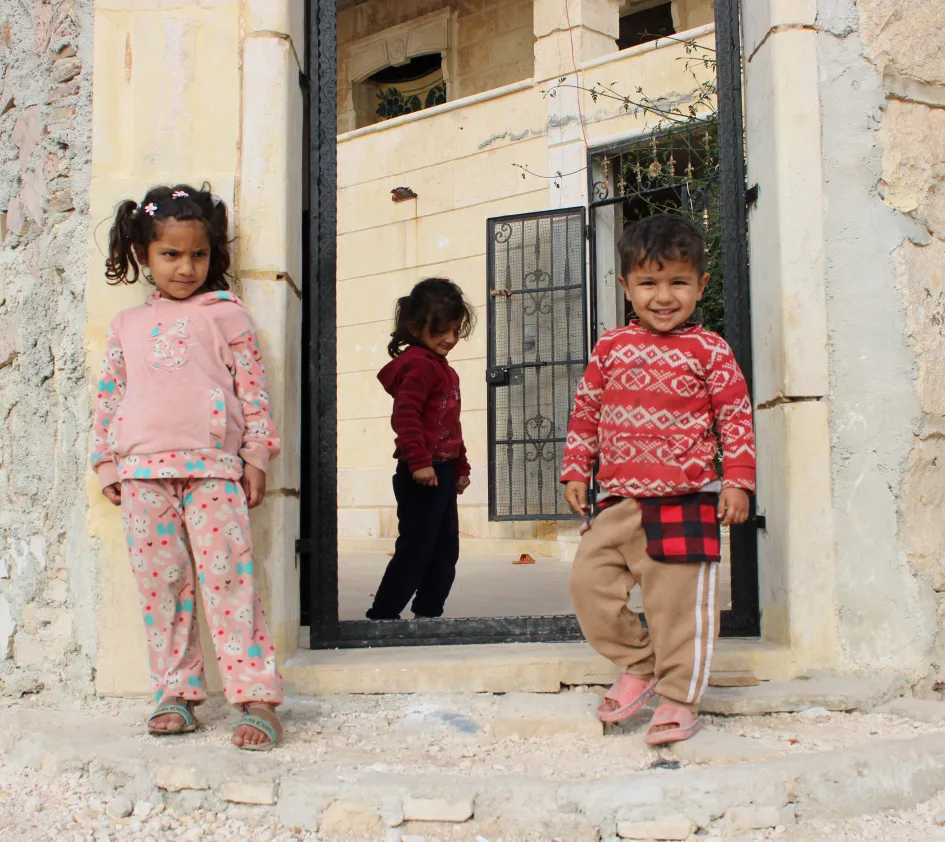
One year after the fall of Assad: three Syrians share their story
On December 8 last year, Assad’s government fell in Syria. For many people, it marked the end of years of fear and uncertainty. One year later, daily life is still far from easy. Jobs are scarce, water and electricity are unreliable, and countless homes lie in ruins. Yet alongside all the hardship, people also speak of relief, reunion and new, cautious hope.
8 December 2025
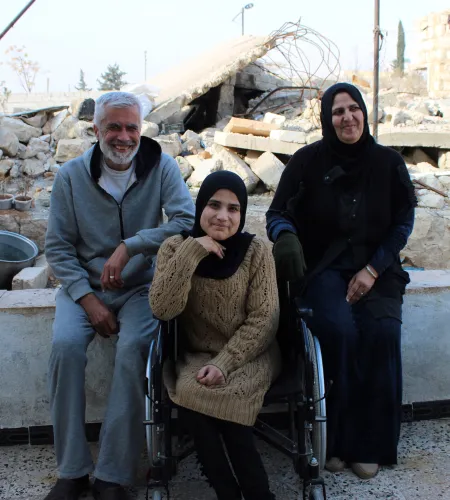
Badriya and Othman
'We never thought we would return'
Othman (54) and his wife Badriya (53) have been displaced since 2012. Over the years, they moved more than twelve times, often between different camps. Sometimes they did not even have a tent and slept outside on stones or in the sand. Almost everything they owned was lost along the way.
Life back home is still difficult. Money is short, work is hard to find, and water is scarce. Othman occasionally helps a neighbour in a small vegetable shop. In exchange, he takes home a few vegetables so the family can cook one simple meal a day. Still, being home makes all the difference. "At home we may eat nothing more than bread and onions," he says, "but that is better than the humiliation of living in a camp."
Their message to the world is simple: Syria deserves a new chance.
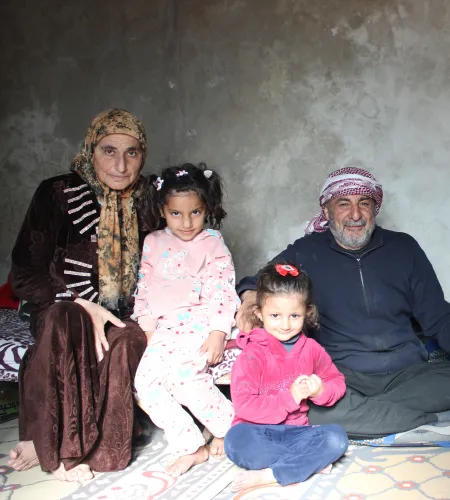
Wahid and Ahlam
'Our family is together again'
Wahid (48) and Ahlam (42) are from Khan al-Assal in western Aleppo. In 2012, heavy shelling forced their family to flee. For years, they moved between villages and camps. Their house was completely destroyed.
After the fall of Assad’s government, they were able to return. Today, two families share the grandfather’s house, which has only three rooms. One of their daughters lives with partial paralysis and needs daily care.
Finding work remains extremely difficult. Water sometimes runs for only one hour every five days. "Basic services here are below zero," Wahid says. Even so, being back together brings comfort. "My heart is finally at rest," Ahlam says. "We were scattered for so long, and now we are together again."
Their hope is to one day rebuild their own home.
Husni
'I was released when everyone thought I was dead'
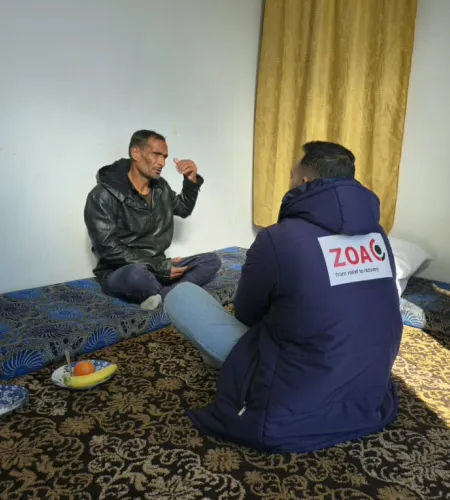
Husni (45) spent six years in the notorious Sidnaya prison under the former government. During his imprisonment he was severely abused, became seriously ill and lost much of his weight. In time, his family was told he had died. His wife left, and their seven children were placed in care institutions.
On December 8 last year - the day Assad’s government fell - Husni was suddenly released. "For the first time in years, I felt that the air I breathe is not monitored," he says. "The fear that accompanied me at every moment began to gradually fade."
With support from people in his community, he received medical treatment. Parts of his home were repaired, and he found work in a concrete factory. Just last month, five of his children were able to move back in with him. His two youngest sons are expected to join them after completing the current school term.
His message to the world is clear: Syrians do not ask for pity, but for the chance to live with dignity and to build a safe future.
Moving forward
One year after the fall of Assad’s government, life in Syria remains deeply uncertain. But for people like Badriya, Othman, Wahid, Ahlam and Husni, this new chapter has brought something that once seemed impossible: the chance to return, to reunite, and to begin again. Not without fear, not without loss — but with cautious hope.
Also read: From water to harvest: New EU-funded project enhances livelihoods in Syria