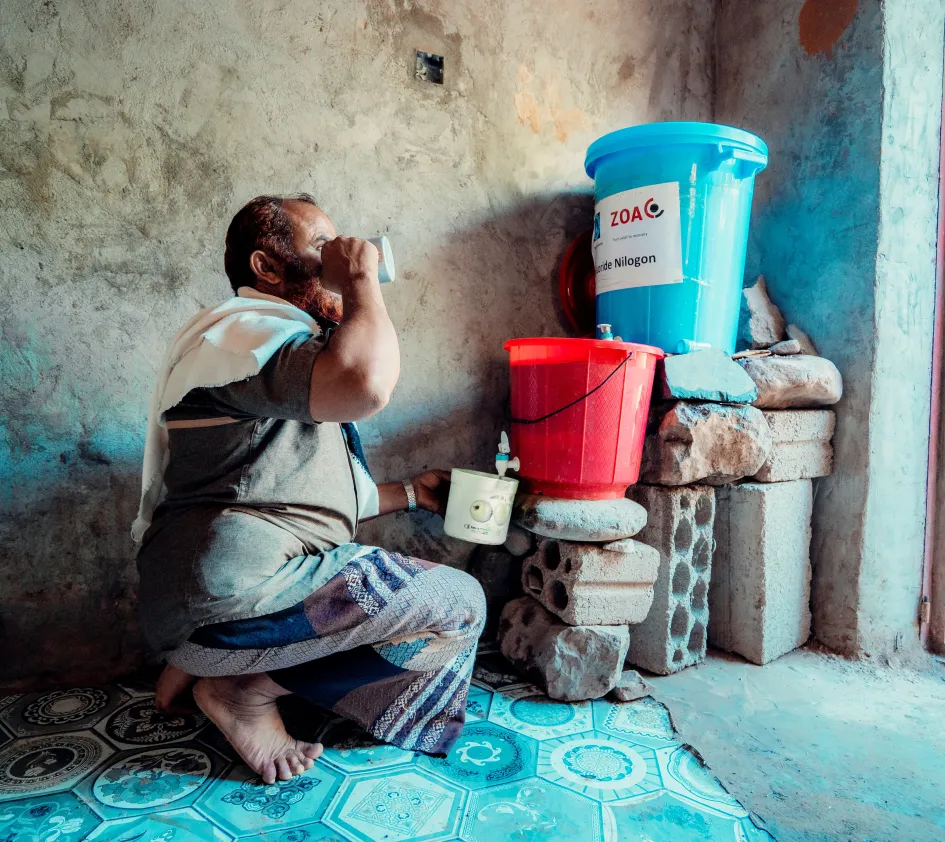
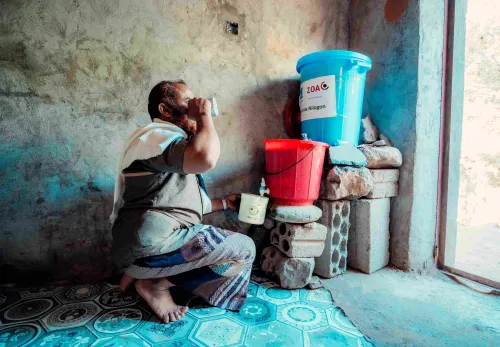
A man drinking water in Yemen

Improving access to safe drinking water in Yemen

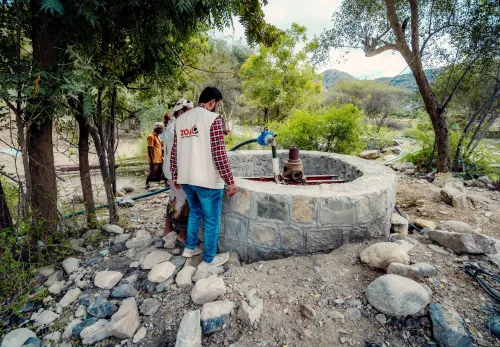
In several regions of Yemen, families rely on groundwater as their only source of drinking water. But in districts such as Al-Hussein and Al-Azariq (Al-Dhale’a Governorate), that water contains extremely high levels of fluoride - sometimes six to ten times above the World Health Organization (WHO) guideline. For children in particular, prolonged exposure can lead to dental and skeletal fluorosis, with lifelong consequences.

Download report

Fluoride filters

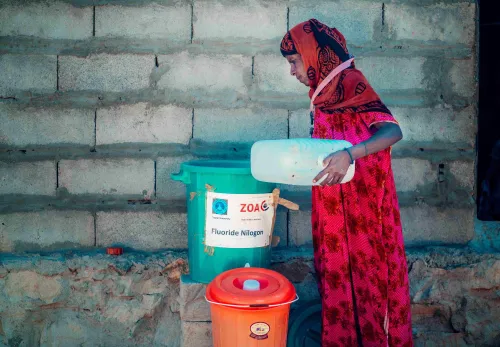
Between August 2023 and July 2024, ZOA supported communities in Al-Hussein and Al-Azariq districts by installing 400 household filters and one community-level filter. The system uses crushed limestone and a small amount of phosphoric acid to reduce fluoride to safe levels within just a few hours. Monitoring showed a successful reduction of fluoride from hazardous levels to below the WHO guideline, with strong user acceptance and correct daily use among almost all participating households.
Affordable and sustainable

This second phase builds on an earlier pilot in Lahj Governorate, demonstrating that the Nilogon filter can provide an affordable and sustainable option for improving water quality in remote, high-fluoride areas. Alongside the technical intervention, communities also received training and awareness sessions on the health impacts of fluoride and the safe operation of the filter.

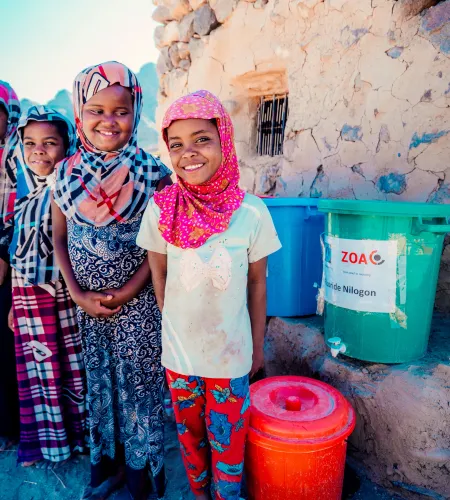
Girls in Yemen

The results show promising potential for scaling the approach more widely in Yemen, where many rural areas face similar water-quality challenges. The project was made possible through ZOA’s funding and technical collaboration with Tezpur University.


Download the summary brochures below, or access the full publication: